
The Pinnacle of Automotive Luxury: A Deep Dive into the World’s Most Expensive Cars
The automotive landscape of 2025 presents a fascinating paradox. On one hand, the average new car price has escalated dramatically, a consequence of stringent safety regulations, the integration of advanced driver-assistance systems, and the insatiable consumer demand for connectivity and comfort. Yet, for a select cadre of ultra-high-net-worth individuals, these rising costs are a mere footnote. Their pursuit of automotive perfection transcends conventional metrics of value, focusing instead on exclusivity, bespoke craftsmanship, and engineering prowess that borders on the artistic.
This exploration delves into the zenith of this elite market, dissecting the world’s most expensive cars. These are not merely modes of transportation; they are rolling sculptures, technological marvels, and potent symbols of generational wealth. As an industry veteran with a decade spent navigating the nuances of the luxury automotive sector, I’ve witnessed firsthand the evolution of this segment, where traditional marques vie with audacious newcomers for the attention of a clientele whose expectations are as boundless as their fortunes.
Understanding the Hyper-Exotic Market
Before dissecting the individual vehicles, it’s crucial to understand the dynamics that drive these stratospheric valuations. The term “hyper-exotic” is often used, but it barely scratches the surface. We are discussing a realm where a single vehicle can command the GDP of a small nation. Several factors contribute to this financial altitude:

Unprecedented Exclusivity: In this market segment, \”limited production\” often means single digits. When a manufacturer commits to producing only five or ten units of a specific model, the scarcity alone becomes a primary driver of value. This ensures that the owner possesses something truly unique, a car that will likely never be replicated.
Bespoke Craftsmanship and Customization: The days of simply ticking boxes on a factory order form are long gone. For the buyers of these hyper-exotics, the process is a collaborative odyssey. They engage directly with master coachbuilders and engineers, dictating everything from material selection—often exotic alloys, rare woods, and hand-tanned leathers—to unique aerodynamic configurations. This level of personalization adds layers of intangible value that cannot be quantified by traditional automotive metrics.
Historical Significance and Brand Legacy: Many of these vehicles draw inspiration from legendary predecessors, linking the modern iteration to a rich tapestry of racing heritage and design evolution. When a manufacturer like Bugatti or Rolls-Royce creates a car that pays homage to a lost icon or a pivotal moment in their history, they are imbuing the new model with a narrative that transcends its mechanical components. This narrative depth is invaluable to collectors who view their acquisitions through the lens of automotive history.
Cutting-Edge Engineering and Materials Science: While aesthetics are paramount, the engineering prowess underpinning these machines is equally astonishing. Manufacturers push the boundaries of what is physically possible, utilizing advanced composites, revolutionary powertrain technologies, and aerodynamic designs that were once confined to the realm of theoretical physics. The sheer technical difficulty of engineering such vehicles at the edge of performance limits adds significantly to their cost.
Deconstructing the Titans: A Top 10 Countdown
To fully appreciate the magnitude of these automotive achievements, we must examine the specific models that define this elite stratum of the market. The following countdown represents the pinnacle of automotive extravagance, based on the latest available valuation data and market trends for 2025.
The Bugatti Divo: Track-Focused Refinement
Estimated Value: $5.8 Million USD
The Bugatti Divo represents a calculated divergence from the Chiron’s hyper-GT philosophy. While the Chiron prioritizes outright top speed and opulent cruising, the Divo is sculpted for the apex. Named after Albert Divo, a celebrated Bugatti racing driver from the 1920s, this machine harks back to the brand’s sporting roots.
From an engineering perspective, the Divo is a masterclass in aerodynamic optimization. Its redesigned bodywork, featuring a prominent fixed rear wing and aggressive front splitter, generates 450 kilograms more downforce than the standard Chiron at its top speed. This aerodynamic enhancement allows the Divo to carve through corners with surgical precision, making it a formidable track weapon.
The interior reflects a similar dedication to its sporting mandate. While still appointed with the finest materials, the cabin is driver-centric, eschewing some of the Chiron’s more ostentatious luxury touches in favor of a focused, performance-oriented environment. The exclusivity is further amplified by its production run, limited to just 40 units globally, ensuring that its owners join a very select fraternity of Bugatti aficionados. The Divo’s value proposition lies in its synthesis of raw performance and curated exclusivity, appealing to the driver who seeks not just speed, but the thrill of the chase.
The Pagani Huayra Imola Roadster: A Carbon Fiber Symphony
Estimated Value: $6.3 Million USD
Pagani, under the visionary guidance of Horacio Pagani, operates in a rarefied atmosphere where automotive engineering converges with artistic expression. The Huayra Imola Roadster exemplifies this philosophy, pushing the boundaries of materials science and performance engineering to their absolute limits.
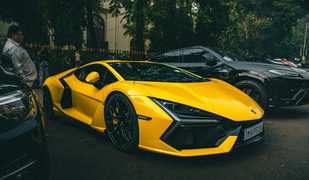
Named after the legendary Autodromo Internazionale Enzo e Dino Ferrari circuit in Imola, Italy, this roadster is designed to extract the maximum performance from Pagani’s formidable V12 powertrain. The heart of the Imola Roadster is a bespoke AMG-sourced 6.0-liter twin-turbo V12, meticulously re-engineered to produce a staggering 850 horsepower. This power is channeled through an advanced seven-speed sequential gearbox, enabling instantaneous gear changes that complement the car’s razor-sharp handling characteristics.
What truly sets the Imola Roadster apart is its construction. The chassis and bodywork are a testament to Pagani’s mastery of carbon fiber composite technology. Every conceivable component has been scrutinized to shave grams, resulting in a dry weight that belies its size. The aerodynamic package is equally aggressive, featuring a massive rear diffuser, intricate front dive planes, and a unique roof scoop system that channels air to the engine with surgical precision.
The interior is a bespoke sanctuary, a testament to the founder’s Italian craftsmanship. Hand-stitched leather, polished aluminum accents, and intricately crafted carbon fiber elements create an environment that is both luxurious and intensely focused. With only eight units slated for production, the Huayra Imola Roadster represents a fleeting moment in automotive history, a collector’s item that embodies the fusion of art, engineering, and performance.
The Pagani Huayra Codalunga: The Art of Aerodynamic Elegance
Estimated Value: $7.4 Million USD
When a commission from two long-standing Pagani collectors calls for a vehicle that pays homage to the ‘long-tail’ Le Mans racers of the 1960s, the result is the Huayra Codalunga. This exquisite machine represents a departure from the standard Huayra’s aggressive, angular design, embracing a flowing, sinuous aesthetic that is both timeless and breathtakingly modern.
The most striking feature of the Codalunga is its elongated rear section, which extends approximately 360 millimeters beyond that of the standard Huayra. This strategic lengthening serves a dual purpose: it enhances aerodynamic efficiency by managing airflow over the extended tail, and it creates a visual profile that is both elegant and menacing. The overall effect is reminiscent of classic Grand Touring racers, but executed with a level of material sophistication that was simply unimaginable in the 1960s.
Underneath the sculpted bodywork lies the same formidable AMG-sourced V12 engine, tuned to deliver approximately 840 horsepower. However, the Codalunga’s performance is defined less by outright speed—though it is certainly prodigious—and more by its sublime handling and mechanical refinement. The suspension system has been recalibrated to suit the car’s unique aerodynamic profile, providing a ride quality that is both compliant for grand touring and taut for spirited driving.
The interior is a testament to Pagani’s dedication to craftsmanship. Woven leather, intricate aluminum detailing, and a symphony of exposed carbon fiber create an environment that is both visually stunning and tactilely rich. The exclusivity is further amplified by its production run, limited to a mere five units. Each Codalunga is a bespoke creation, ensuring that no two are exactly alike. This level of rarity, combined with its stunning design and engineering excellence, solidifies its position as one of the most desirable hypercars in the world.
The Mercedes-Maybach Exelero: A Tycoon’s Testbed
Estimated Value: $8 Million USD
Unlike the other vehicles on this list, which were born from the desires of private collectors, the Mercedes-Maybach Exelero has a fascinatingly utilitarian genesis. Commissioned in 2004 by Fulda, the German subsidiary of Goodyear, the Exelero was conceived as the ultimate tyre testing vehicle. Its purpose was to validate Fulda’s new high-performance Radial Breaker technology, which was designed to withstand speeds in excess of 350 km/h (217 mph).
To achieve this, the Exelero required a chassis capable of withstanding extreme stresses and a powertrain that could deliver sustained high-speed performance. Mercedes-Benz responded by utilizing the robust platform of the Maybach 57, but extensively modifying it to meet Fulda’s stringent requirements. The result was a unique, two-seat coupé that bore the hallmarks of Maybach’s opulent design language but was engineered for a singular purpose.
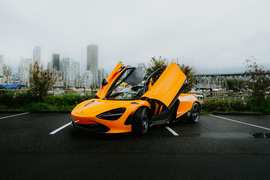
At the heart of the Exelero lies a hand-built, twin-turbocharged V12 engine, producing a formidable 690 horsepower and