The Pinnacle of Automotive Excess: A Definitive Ranking of the World’s Most Expensive Cars
In the hyper-inflated luxury market of 2026, the term “expensive” takes on a meaning almost incomprehensible to the average consumer. While mainstream automotive prices have certainly escalated, tracking pace with inflation and the integration of advanced technology, the true stratosphere of automotive wealth exists in a realm where monetary value becomes almost secondary to bespoke craftsmanship and unparalleled exclusivity. This elite echelon isn’t merely buying transportation; they are commissioning rolling works of art, engineering marvels, and symbols of legacy that redefine what a car can be.

With an estimated 58 million millionaires and nearly 2,800 billionaires globally, the demand for vehicles that transcend conventional luxury has never been higher. When a net worth rivals the GDP of a small nation, standard supercars feel pedestrian. The ultimate expression of this financial might manifests in the form of hyper-exclusive, coach-built automobiles, where the constraints of mass production simply do not apply. This definitive guide delves into the most extravagant expressions of wealth ever put on four wheels, ranking the top 10 most expensive cars in the world as of 2026.
Bugatti Divo: The Track-Focused Masterpiece
Breaking into this rarefied list at a staggering $5.5 million, the Bugatti Divo serves as the perfect entry point into the world of billion-dollar automotive exclusivity. Based on the legendary Chiron platform, the Divo represents a fundamental shift in philosophy. While the Chiron prioritizes outright top speed and Grand Touring comfort, the Divo is laser-focused on cornering prowess and aerodynamic agility.
Production of the Divo was strictly limited to just 40 units worldwide, ensuring that each owner possesses a piece of Bugatti history. The \”Divo\” moniker pays homage to Albert Divo, a former Bugatti works driver who secured two victories at the Targa Florio endurance race in the 1920s. This nod to racing heritage is physically manifested in the car’s aggressive aerodynamic package. A fixed rear wing, optimized front splitter, and complex diffuser system work in tandem to generate significantly more downforce than the standard Chiron, effectively pressing the car into the tarmac for superior grip.
Under the skin, the Divo retains the Chiron’s iconic quad-turbocharged W16 engine. This monumental powerplant produces a breathtaking 1,479 horsepower, enabling the Divo to rocket from 0 to 60 mph in a mere 2.4 seconds. However, its top speed is electronically limited to 236 mph—considerably lower than the Chiron’s 261 mph, but a necessary sacrifice to achieve its razor-sharp handling dynamics.
Beyond the performance metrics, the Divo’s exclusivity lies in its bespoke nature. Bugatti afforded its select clientele the freedom to personalize nearly every aspect of their vehicle. From intricate carbon fiber weave patterns and bespoke interior color palettes to custom-tailored driving modes, each Divo is a unique reflection of its owner’s tastes. This level of customization transforms the car from a mere product into a deeply personal artifact, justifying its astronomical price tag for those who can afford it. The Divo stands as a testament to Bugatti’s engineering prowess and its ability to cater to the most discerning automotive connoisseurs.
Pagani Huayra Imola Roadster: The Extreme Expression of Bespoke Craftsmanship
Ascending the ranks to $5.8 million, we encounter the Pagani Huayra Imola Roadster, a creation that pushes the boundaries of what is considered road-legal. Pagani Automobili, founded by the visionary Horacio Pagani, has long been synonymous with avant-garde design and obsessive attention to detail. The Huayra Imola Roadster represents the zenith of this philosophy, stemming from the brand’s clandestine \”Grandi Complicazioni\” division—a secretive workshop dedicated to crafting the most extreme and personalized vehicles for Pagani’s most valued clients.
The genesis of the Imola Roadster lies in the already potent Huayra. However, the engineers at Pagani sought to extract even greater performance from their celebrated mid-engined hypercar. The result is a machine that blurs the line between road car and track weapon. Power is derived from an enhanced AMG-sourced twin-turbocharged V12 engine, which has been meticulously re-engineered to produce a staggering 838 horsepower. This significant output is channeled through a sophisticated transmission system, ensuring seamless power delivery to the rear wheels.
The \”Imola\” designation pays homage to the Autodromo Enzo e Dino Ferrari circuit in Imola, Italy, a track where Pagani’s prototypes undergo rigorous testing. The car’s aerodynamic configuration is nothing short of theatrical. A complex array of active aerodynamic elements, including a substantial rear wing and front dive planes, work in concert to generate an extraordinary 900 kilograms of downforce at speed. This immense downward pressure allows the Imola Roadster to maintain incredible stability during high-speed cornering, challenging the limits of tire adhesion.
Weight reduction was a paramount concern for the Pagani team. The Imola Roadster incorporates an extensive application of advanced lightweight materials, including carbon fiber, titanium, and even carbon-titanium composites. These materials are not merely structural; they are often left exposed with intricate weaves and finishes that serve as visual art pieces. The interior is equally breathtaking, featuring hand-stitched leather upholstery, bespoke trim elements, and a driver-focused cockpit that feels more akin to an aircraft cockpit than a traditional car interior.
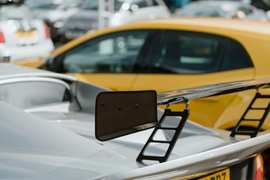
Production of the Huayra Imola Roadster is staggeringly exclusive, limited to a mere eight units worldwide. This scarcity, combined with the car’s extreme performance capabilities and unparalleled craftsmanship, solidifies its position as one of the most coveted automobiles on the planet. For the discerning collector, the Imola Roadster is not just a car; it is a rolling sculpture, a testament to the enduring appeal of analog hypercar purity in an increasingly digital world.
Pagani Huayra Codalunga: The Ultimate Homage to Le Mans Legends
Continuing our exploration of Pagani’s exclusive creations, we arrive at the Huayra Codalunga, a masterpiece of automotive design and engineering that commands a price of $7.4 million. The Codalunga, Italian for \”long tail,\” is a stunning tribute to the legendary endurance racers of the 1960s, specifically the iconic long-tailed Porsche 917 and Ferrari P4 models that once dominated the 24 Hours of Le Mans. This automotive reinterpretation was born from a unique request by two long-standing Pagani collectors who sought a modern interpretation of these classic racing silhouettes.
The Codalunga’s most striking feature is its elongated rear section, which extends a remarkable 36 centimeters further than the standard Huayra. This dramatic design decision was not merely for aesthetic effect; it was a functional requirement to enhance aerodynamic efficiency. The extended tail reduces drag and improves high-speed stability, allowing the car to slice through the air with greater precision. The sweeping lines of the rear deck evoke a sense of fluid motion, even when the car is stationary.
Powering this exceptional machine is an enhanced AMG-sourced twin-turbocharged V12 engine, capable of producing approximately 830 horsepower. This prodigious power is delivered through a sophisticated seven-speed automated manual transmission, ensuring smooth and rapid gear changes. The engine itself is a work of art, often featuring exposed carbon fiber elements and intricate detailing that beg to be admired.
Inside, the Codalunga continues the theme of opulent exclusivity. The cabin is a masterclass in Pagani’s signature style, blending exotic materials with handcrafted precision. Woven leather upholstery, often in bespoke color combinations, adorns the seats and dashboard. Brushed aluminum switchgear, polished titanium accents, and exposed carbon fiber create a tactile and visually stunning environment. The attention to detail is staggering, with every surface seemingly considered and perfected.
The production of the Huayra Codalunga is even more restrictive than that of the Imola Roadster. Only five examples were ever produced, making it an exceedingly rare sight. Furthermore, each Codalunga is fully homologated for road use, meaning these magnificent machines are intended to be driven and enjoyed on public roads, albeit likely to the admiration of onlookers. The Huayra Codalunga represents the pinnacle of Pagani’s dedication to blending racing heritage with bespoke luxury, creating an automotive icon that transcends mere transportation.
Mercedes-Maybach Exelero: The One-Off Tire Testing Marvel
Stepping away from the realm of hyper-exclusive production series, we encounter a truly unique automotive legend: the Mercedes-Maybach Exelero, valued at an astonishing $8 million. Unlike the coach-built commissions that dominate this list, the Exelero was conceived for a very specific and unusual purpose. It was commissioned in 2004 by Fulda, the German subsidiary of the global tire giant Goodyear, as a high-performance testbed for their new generation of wide, high-speed tires.
To effectively test these cutting-edge tires, Fulda required a vehicle capable of reaching speeds in excess of 217 mph (350 km/h) while carrying substantial weight. The answer was the Exelero, a one-of-one coupe built upon the chassis of the contemporary Mercedes-Benz Maybach 57 limousine. This unique foundation provided the necessary strength and stability for the rigorous testing regimen.
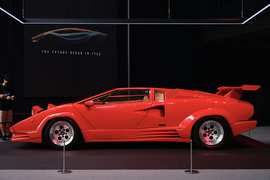
The Exelero’s design is a dramatic departure from anything else on the road. Developed through a collaboration between Fulda and four automotive design students from the University of Pforzheim, the car features a sweeping, low-slung silhouette reminiscent of 1930s streamlined race