
The World’s Most Exclusive Automobiles: A Deep Dive into the 10 Most Expensive Cars Ever Created
In an era where automotive technology advances at a breakneck pace, the definition of a “new car” has evolved significantly. What was once considered a luxury item has transformed into a sophisticated blend of performance engineering, cutting-edge safety systems, and immersive digital experiences. However, for the world’s elite, the conventional market simply doesn’t suffice. When wealth accumulates to the point where a standard luxury vehicle feels pedestrian, the automotive landscape shifts dramatically, giving rise to hyper-exclusive, coach-built marvels that redefine the very concept of a car.
The concept of luxury has always been subjective, but when viewed through the lens of the ultra-wealthy, it takes on an entirely different dimension. With a global population of millionaires and billionaires rapidly expanding, the demand for bespoke creations that stand apart from the masses has never been higher. These automotive masterpieces are not merely modes of transportation; they are rolling works of art, engineering testaments, and ultimate symbols of status. This comprehensive exploration delves into the ten most expensive cars ever produced, analyzing the craftsmanship, innovation, and sheer audacity that propel these vehicles into the stratosphere of automotive desirability.

The Hierarchy of Exclusivity: From Bespoke Luxury to Hyper-Performance
Before embarking on this journey through automotive opulence, it is crucial to understand the distinction between mass-produced supercars and the vehicles that occupy this exclusive list. While cars like the Bugatti Chiron or the Lamborghini Aventador are undeniably rare and expensive, they are produced in relatively high volumes compared to the bespoke creations that dominate the upper echelons of the market. The vehicles featured here are often the result of direct commissions from clients to manufacturers, involving years of development, meticulous hand-craftsmanship, and the integration of personalized features that render each unit truly unique.
Understanding the Market Dynamics
The market for the world’s most expensive cars operates outside the traditional automotive economy. These vehicles are rarely advertised through conventional channels; their existence is often a closely guarded secret, known only to the manufacturers and the select few who can afford them. The pricing structure is equally opaque, often involving complex negotiations, material costs that dwarf those of standard production cars, and the intangible value of exclusivity. Furthermore, many of these cars are not simply sold but rather commissioned, meaning the price reflects not only the engineering and materials but also the client’s specific vision and desires.
A New Benchmark in Automotive Luxury
The automotive industry has witnessed a significant shift in recent years, with manufacturers increasingly catering to the demand for ultra-exclusive vehicles. This trend is driven by several factors, including the growing number of high-net-worth individuals, the desire for personalized products in an increasingly homogenized world, and the technical feasibility of creating highly complex, low-volume automobiles. The cars on this list represent the pinnacle of this evolution, pushing the boundaries of what is technically and artistically possible in automotive design and engineering.
The Bugatti Divo: Precision-Engineered Agility
Kicking off our exploration of the world’s most expensive cars is the Bugatti Divo, a vehicle that redefines the concept of a track-focused hypercar. While it shares its fundamental architecture with the iconic Bugatti Chiron, the Divo represents a deliberate departure from the latter’s focus on ultimate straight-line speed. Instead, Bugatti’s engineers sought to create a car that prioritizes agility, cornering prowess, and a more visceral driving experience.
Named in honor of Albert Divo, a legendary French racing driver who achieved considerable success with Bugatti in the 1920s, the Divo is a testament to the brand’s rich racing heritage. This limited-production model, with only 40 units ever produced, was conceived as a more track-oriented counterpart to the Chiron, emphasizing handling dynamics without sacrificing the brand’s signature blend of luxury and performance.
The Divo’s transformation from the standard Chiron begins with a radical redesign of the bodywork. Bugatti’s designers eschewed the Chiron’s aerodynamic simplicity for a more aggressive, complex aesthetic. The result is a vehicle that is visually striking and aerodynamically sophisticated. The most prominent feature is the imposing fixed rear wing, a departure from the Chiron’s retractable spoiler. This massive wing, spanning an impressive 1.83 meters, generates a substantial amount of downforce, effectively pressing the car into the road and enhancing stability during high-speed cornering.
Beyond the rear wing, the Divo’s bodywork is a symphony of aerodynamic optimization. The front fascia features a redesigned splitter and larger air intakes, channeling air more effectively to cool the powerful engine and brakes. The side profile is characterized by sculpted air ducts that feed the massive radiators and enhance engine cooling. The rear of the car is equally dramatic, with a complex diffuser system that works in concert with the rear wing to optimize airflow and generate downforce.
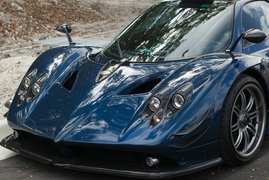
Beneath the stunning exterior lies the same heart-stopping powertrain that powers the Bugatti Chiron. The Divo is propelled by the legendary 8.0-liter quad-turbocharged W16 engine, a mechanical marvel that produces an astonishing 1,479 horsepower and 1,180 lb-ft of torque. This prodigious power is sent to all four wheels through Bugatti’s Haldex all-wheel-drive system, ensuring optimal traction and acceleration.
While the Divo’s top speed is electronically limited to 236 mph, significantly lower than the Chiron’s 261 mph, this is a deliberate trade-off. The focus here is not on ultimate velocity but on cornering performance. The Divo generates a remarkable 1.6g of lateral acceleration, allowing it to carve through corners with astonishing precision and grip. The car’s suspension has been retuned for a sportier feel, with stiffer springs and revised damping settings that enhance responsiveness without compromising ride quality to an unacceptable degree.
The interior of the Divo is a masterclass in bespoke luxury, albeit with a sportier orientation than the standard Chiron. The cabin is trimmed in Alcantara and leather, with a color scheme that accentuates the car’s aggressive nature. The two-tone upholstery features a combination of Bugatti Blue and French Racing Blue, with contrasting stitching and accents throughout. The seats are heavily bolstered to provide support during spirited driving, yet they remain sumptuously comfortable, reflecting Bugatti’s commitment to luxury.
One of the most striking interior features is the use of carbon fiber. The material is extensively used throughout the cabin, not merely for aesthetic purposes but also to save weight. The center console, door panels, and dashboard are all trimmed in carbon fiber, lending the interior a purposeful, racing-inspired ambiance. Despite the emphasis on performance, Bugatti has not skimped on luxury. The car is equipped with a premium infotainment system, climate control, and all the modern conveniences expected of a vehicle in this price bracket.
The exclusivity of the Divo is a key factor in its appeal to collectors. With only 40 units produced, it is a rare sight even among hypercars. The commissioning process allowed buyers to specify certain details, further enhancing the sense of personalization. Each Divo is a rolling sculpture, a testament to Bugatti’s engineering prowess and design excellence. The price tag of approximately $5.8 million reflects the immense engineering effort, the limited production run, and the sheer cachet of owning a Bugatti. The Divo represents the perfect synthesis of Bugatti’s heritage as a racing marque and its modern identity as a producer of the world’s most exclusive automobiles.
The Pagani Huayra Imola Roadster: An Aerodynamic Masterpiece
Continuing our journey through the upper echelons of automotive exclusivity, we arrive at the Pagani Huayra Imola Roadster. Pagani Automobili, the brainchild of Horacio Pagani, has carved a unique niche in the hypercar market by blending exquisite craftsmanship with cutting-edge technology. The Huayra, the successor to the legendary Zonda, has served as the foundation for a series of increasingly extreme and exclusive variants, with the Imola Roadster representing one of the most audacious yet.
Named after the iconic Italian racetrack where it underwent extensive development, the Imola Roadster takes the already extraordinary Huayra to a new level of performance and engineering sophistication. This limited-production model, with only eight units planned, pushes the boundaries of what is technically possible in a road-legal vehicle.
The Huayra Imola Roadster is the result of a highly collaborative development process between Pagani and a select group of clients. These discerning customers were not content with the already impressive standard Huayra and sought a more extreme, track-focused iteration of the car. The development process involved thousands of kilometers of testing at the Imola circuit, with engineers and drivers working tirelessly to optimize every aspect of the vehicle.
Visually, the Imola Roadster is a dramatic departure from the standard Huayra. The car’s bodywork is a complex interplay of aerodynamics and aesthetics, a hallmark of Pagani’s design philosophy. The front fascia features a redesigned splitter and canards that generate significant downforce, pressing the car onto the track for enhanced grip. The side profile is dominated by the car’s aggressive aerodynamics, with sculpted air intakes and vents that channel air to the engine and brakes.
The most striking aerodynamic feature is the massive fixed rear wing. Unlike the active aerodynamics of the standard Huayra, the Imola Roadster employs a large, fixed wing that generates substantial downforce, ensuring stability at high speeds. The rear diffuser is equally aggressive, with multiple vanes that work in concert with the rear wing to optimize airflow and reduce drag.
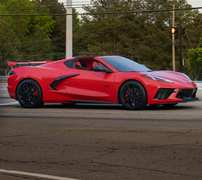
Beneath the stunning exterior lies the same heart-stopping powertrain that has become synonymous with Pagani. The Imola Roadster is powered by a bespoke version of the AMG