
Title: The Pinnacle of Automotive Extravagance: A Deep Dive into the World’s Most Expensive Cars of 2026
The automotive landscape of 2026 is a fascinating dichotomy. On one hand, the narrative of “cars are getting too expensive” resonates deeply with the average consumer, as rising inflation and the relentless march of technological integration have pushed the entry-level price for a new vehicle to unprecedented heights. Yet, for a select echelon of the global elite, these fiscal realities simply do not apply. When one’s net worth rivals the GDP of a small nation, the concept of “value” shifts dramatically from affordability to pure, unadulterated exclusivity and craftsmanship.
For these ultra-high-net-worth individuals, the standard luxury and sports cars—even the high-performance variants—fail to satisfy the craving for true distinction. They seek machines that are not merely modes of transport but rolling sculptures, statements of power, and testaments to human ingenuity pushed to its absolute zenith. This article delves into the rarefied air of the automotive world, exploring the top 10 most expensive cars of 2026, where price tags are eclipsed only by the audacity of their engineering and design.
The Super-Rich Rationale: Why Do These Cars Cost So Much?

Before dissecting the specific models, it is crucial to understand the economic forces at play that justify these astronomical figures. The primary driver is exclusivity. While a standard production car might be built in tens or hundreds of thousands of units, these hypercars are often one-offs or limited runs of fewer than ten vehicles. This scarcity, combined with the bespoke nature of their creation, exponentially drives up the price.
Furthermore, the materials and technology employed are often sourced from aerospace and F1 racing. Carbon fiber monocoques, titanium alloys, and hand-stitched leathers from rare breeds are standard. The engineering hours invested in perfecting the aerodynamics and powertrain of a single vehicle can run into thousands of man-hours, each carried out by master craftsmen rather than automated assembly lines.
Finally, brand heritage plays a significant role. Brands like Bugatti and Rolls-Royce do not just sell cars; they sell a legacy of innovation, luxury, and performance that has been cultivated over more than a century. This intangible brand equity is factored heavily into the final price tag.
The Precision Track Weapon: Bugatti Divo
Kicking off our countdown is the Bugatti Divo, a machine that transforms the already formidable Bugatti Chiron into a track-focused scalpel. While the Chiron prioritizes straight-line speed and grand touring comfort, the Divo is engineered for the agility and downforce required to master corners.
Named after Albert Divo, a French aviator and Bugatti works driver who triumphed in the Targa Florio twice in the 1920s, the Divo pays homage to Bugatti’s racing heritage. Only 40 examples were ever produced, each carrying a starting price of approximately $5.8 million (or roughly £4.4 million).
Under the hood, the Divo retains the Chiron’s iconic 8.0-liter quad-turbocharged W16 engine, producing a staggering 1,479 horsepower. However, Bugatti engineers implemented a significant diet, shedding weight through extensive use of carbon fiber and optimizing the aerodynamics. The result is a car that generates 452 kg of downforce at top speed, allowing it to corner at levels that defy conventional physics for a road-legal vehicle. The customization potential is virtually limitless, with clients able to specify unique paint schemes, interior materials, and even personalized trim elements, ensuring that no two Divo models are exactly alike.
The Bespoke Roadster: Pagani Huayra Imola Roadster
Horacio Pagani has long been considered an automotive artist, blending engineering prowess with Italian flair. The Pagani Huayra Imola Roadster represents the pinnacle of his ‘Grandi Complicazioni’ division, a bespoke atelier that caters to the most discerning collectors. This limited-run convertible elevates the already sensational Huayra into a realm of even greater exclusivity and performance.
Priced at approximately $6.2 million (or about £4.7 million), only eight Imola Roadsters are slated for production. The car is a masterclass in lightweight construction, utilizing Pagani’s proprietary Carbo-Titanium and Carbo-Triax HP62 materials to keep weight at a minimum. This focus on mass reduction is crucial for achieving the car’s phenomenal handling characteristics.
The Imola Roadster is powered by an enhanced version of the AMG-sourced twin-turbo V12 engine, delivering an output of 838 horsepower. This prodigious power is managed through an advanced aerodynamics package that generates a remarkable 900 kg of downforce, pinning the car to the tarmac during high-speed cornering. For the elite buyer seeking a visceral, open-air driving experience combined with avant-garde Italian design, the Huayra Imola Roadster stands as a peerless artifact of automotive artistry.
The Longtail Masterpiece: Pagani Huayra Codalunga
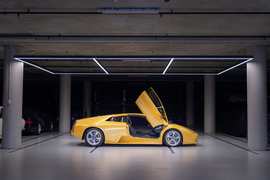
Further emphasizing Pagani’s dominance in the hyper-exclusive segment, the Huayra Codalunga represents a nostalgic nod to the legendary ‘longtail’ racing prototypes of the 1960s, such as the iconic Ferrari P4 and Mirage M1. This stunning machine was born from a request by two of Pagani’s most valued collectors, who desired a road-legal interpretation of the Le Mans racers that captured their imagination in their youth.
Only five examples of the Codalunga were ever constructed, each commanding a price in the region of $7.8 million (or roughly £5.9 million). The most striking feature of the Codalunga is its elongated rear section, which stretches an additional 360mm compared to the standard Huayra. This extended tail is not merely for aesthetic effect; it is a meticulously sculpted aerodynamic element designed to reduce drag and enhance high-speed stability.
Propulsion comes from a modified twin-turbocharged V12 engine, tuned to produce 830 horsepower. The craftsmanship extends to the interior, where clients can specify exotic materials such as woven leather upholstery, creating a cabin that feels both ancient and futuristic. The Huayra Codalunga is a rolling sculpture that bridges the gap between motorsport history and contemporary hypercar engineering, making it one of the most sought-after vehicles of the decade.
The Tire-Testing Legend: Mercedes-Maybach Exelero
In a departure from the bespoke customer commissions that dominate this list, the Mercedes-Maybach Exelero has a unique origin story. Unlike its counterparts, which were commissioned by billionaires as personal playthings, the Exelero was created in 2004 as a high-speed testbed for Fulda, the German tire division of Goodyear. The requirement was simple yet demanding: the vehicle needed to exceed 217 mph to validate Fulda’s new generation of high-performance tires.
Built upon the robust chassis of the Maybach 57 limousine, the Exelero is a study in contrasts. It possesses the imposing presence of a luxury sedan but is cloaked in a sleek, aerodynamic coupe body designed by students from the Pforzheim University of Applied Sciences. Under the hood lies a modified version of the Maybach’s V12 engine, enlarged to 7.3 liters and augmented with twin turbochargers to produce 690 horsepower.
While its days of tire testing are long over, the Exelero has lived a storied life. It has graced the screens of music videos, featured in television shows, and is now a centerpiece of the Friedhelm Loh collection at the Automuseum Mülheim an der Ruhr in Germany. Its unique status as a purpose-built, one-off machine ensures its place in automotive history, with an estimated value placing it around $8 million (or approximately £6.2 million).
The Homage to a Legend: Bugatti Centodieci
To commemorate the 110th anniversary of the Bugatti brand in 2019, the marque unveiled the Centodieci, a limited-production hypercar that pays homage to one of its most iconic predecessors: the EB110 Super Sport from the 1990s. This modern interpretation blends the retro-futuristic design cues of the EB110 with Bugatti’s contemporary engineering prowess.
The Centodieci is more than just a Chiron with a new body; it represents a significant engineering undertaking. The exterior required extensive computer-aided design and virtual reality modeling to create the distinctive five-hole front grille, the C-shaped window line, and the quad exhaust system that are hallmarks of the EB110. This design process took over six months to perfect, showcasing Bugatti’s commitment to historical accuracy and aesthetic excellence.
Powering the Centodieci is an even more potent version of the quad-turbo W16 engine, delivering a colossal 1,578 horsepower. This allows the car to accelerate from 0 to 60 mph in a mere 2.4 seconds and reach a top speed electronically limited to 236 mph. Only ten examples were produced for the world’s most exclusive clientele, with a price tag of approximately $9 million (or about £7 million). The Centodieci is a fitting tribute to the car that revived the Bugatti brand and a testament to the enduring legacy of Ettore Bugatti’s vision.
The Unique Prototype: Bugatti Chiron Profilée

The Bugatti Chiron